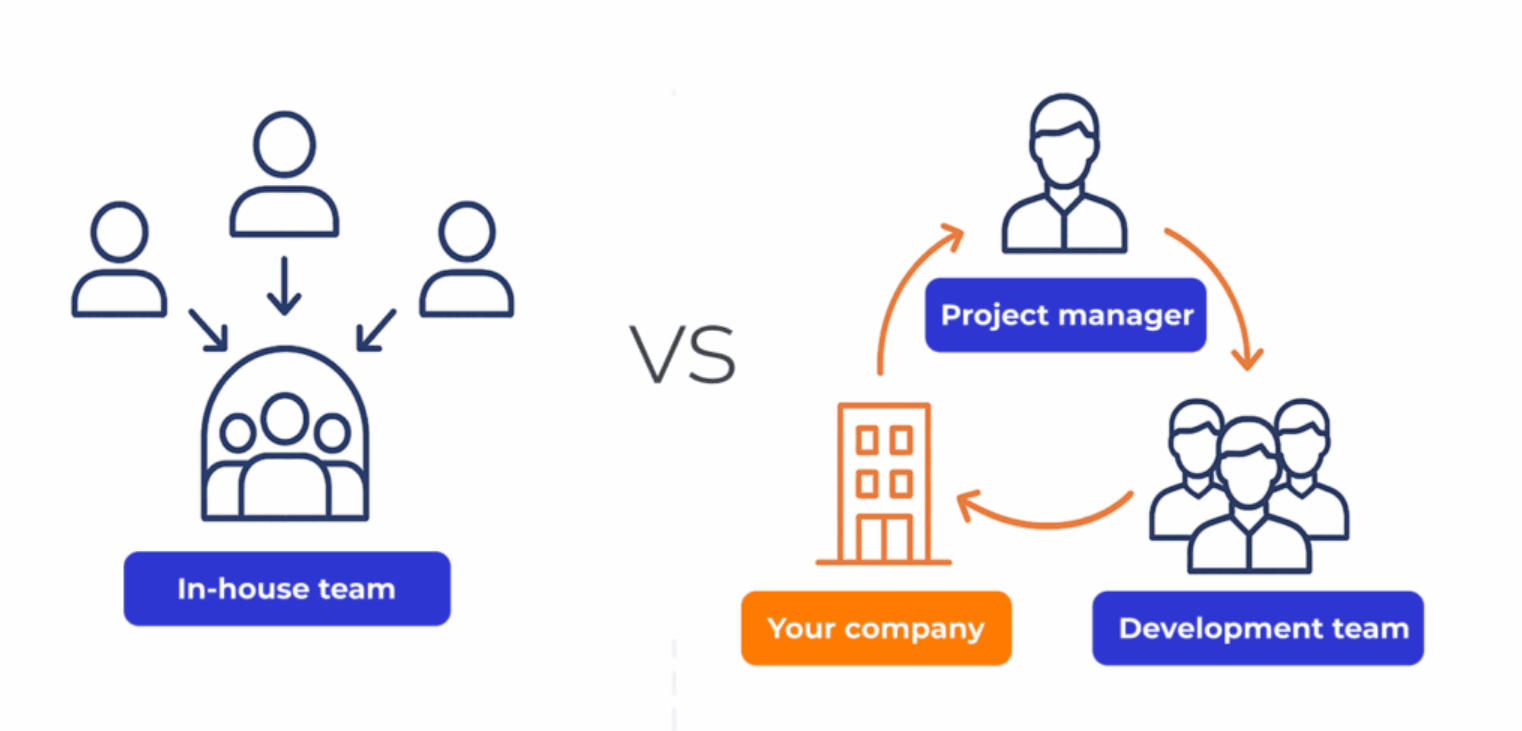
In today’s competitive digital economy, businesses are constantly under pressure to innovate, deliver faster, and stay ahead of market trends. Technology initiatives, software rollouts, or digital transformation projects require skilled professionals—but finding the right expertise internally is often easier said than done. That’s where two common engagement models come into play: staff augmentation service and project outsourcing.
Both models help organizations fill talent gaps and accelerate delivery, but they are fundamentally different in scope, control, and outcomes. The big question many leaders face is: which model is right for your business needs?
In this guide, we’ll break down the difference between staff augmentation and outsourcing, highlight the strengths and limitations of each, and show you how a team augmentation service can help you strike the right balance.
Understanding the Two Models
What Is Staff Augmentation?
Staff augmentation is the practice of extending your in-house team with external professionals on a temporary or long-term basis. These individuals work as an integral part of your team, following your processes, tools, and management style.
For example, if your development team is short on experienced QA engineers or cloud architects, you can hire them through a team augmentation service to plug into your existing workflows. You retain complete control over project management, timelines, and deliverables, while benefiting from specialized expertise without long-term hiring commitments.
What Is Project Outsourcing?
Project outsourcing, on the other hand, involves delegating an entire project—or a significant portion of it—to an external vendor. Here, the responsibility for planning, execution, delivery, and even quality assurance rests with the outsourcing partner.
Think of it as a “hands-off” model: your vendor provides the team, manages the processes, and delivers the finished product or service. While you provide requirements, oversight, and acceptance criteria, the day-to-day execution is entirely out of your hands.
Key Differences Between Staff Augmentation and Outsourcing
Both models help you address resource constraints, but the differences in which is best for building your data team lie in ownership, flexibility, and the style of collaboration.
- Level of Control
- Staff Augmentation: You maintain full control over project management and execution.
- Outsourcing: The vendor controls execution while you focus on outcomes.
- Integration with Internal Teams
- Staff Augmentation: External professionals work like your own employees, integrating with your internal team.
- Outsourcing: Work is executed independently with limited day-to-day collaboration.
- Flexibility
- Staff Augmentation: Scale resources up or down as needed—ideal for dynamic, evolving projects.
- Outsourcing: Contracts are usually fixed, making it harder to adapt quickly to scope changes.
- Expertise
- Staff Augmentation: Best suited when you need to add specific skill sets to complement your team.
- Outsourcing: Ideal when you want end-to-end delivery without investing in building internal capabilities.
When to Choose Staff Augmentation
Staff augmentation is best when:
- You already have strong in-house project management but need to scale your workforce temporarily.
- Your project requires niche expertise (e.g., cybersecurity, cloud migration, AI integration) that your existing team lacks.
- You want complete visibility and control over the project’s progress.
- You need flexibility to adjust team size as project requirements evolve.
By partnering with a team augmentation service, businesses can bypass the lengthy recruitment process, lower hiring costs, and tap into a global talent pool—all while ensuring alignment with their internal culture and standards.
When to Choose Project Outsourcing
Project outsourcing is a better fit when:
- You lack the internal resources or expertise to manage the project in-house.
- The project is highly specialized or non-core to your business (e.g., mobile app development for a retailer, or payroll automation for a manufacturing firm).
- Your priority is speed to market, and you’re willing to hand over full responsibility to experts.
- You want predictable costs and outcomes defined by a service-level agreement (SLA).
Outsourcing is often seen as a “turnkey” solution—it frees you from daily management, but also reduces your ability to make rapid adjustments midstream.
Advantages of Staff Augmentation
- Talent on Demand: Quickly access specialized professionals without long-term hiring.
- Cost Efficiency: Pay only for the skills you need, for the duration required.
- Control and Transparency: Maintain oversight of every detail of execution.
- Scalability: Scale resources up or down according to workload.
- Cultural Alignment: Augmented staff integrate into your processes and team culture.
This model ensures businesses remain agile, making a team augmentation service a powerful option for organizations with dynamic project pipelines.
Advantages of Project Outsourcing
- End-to-End Delivery: The vendor handles planning, staffing, and execution.
- Focus on Core Business: Free up internal teams to focus on strategic priorities.
- Predictable Budgeting: Fixed pricing models and SLAs make costs transparent.
- Specialized Expertise: Vendors bring proven methodologies and industry knowledge.
- Speed: With dedicated teams, projects often reach the market faster.
For organizations that want to minimize involvement in execution, outsourcing provides peace of mind.
Limitations to Consider
- Staff Augmentation: Requires strong internal management; without it, efficiency may drop. Costs can add up if augmentation is used for very long-term needs.
- Project Outsourcing: Reduced control, risk of misalignment with company culture, and possible communication challenges due to time zones or vendor practices.
How to Decide Which Model Fits Your Business
To choose between staff augmentation and outsourcing, consider:
- Project Complexity: Is the project core to your business or peripheral?
- Internal Capabilities: Do you have strong project managers and technical leads in place?
- Desired Control: Do you want daily involvement or prefer a hands-off approach?
- Budget Flexibility: Do you prefer fixed, predictable costs or variable spending that scales with your needs?
- Timeframe: Is speed more important than long-term integration?
Answering these questions will clarify whether a team augmentation service or a project outsourcing partner is the better fit.
Read also: Driving Business Growth Through Strategic Marketing and Modern Technology
Final Thoughts
Both staff augmentation and project outsourcing are proven strategies for bridging the talent gap, accelerating delivery, and reducing time-to-market. However, they serve different business needs.
- Staff augmentation provides you with skilled professionals who seamlessly integrate into your team, offering flexibility, cultural alignment, and control.
- Project outsourcing delivers end-to-end results, freeing you from day-to-day management, but it also limits flexibility.
Ultimately, the right choice depends on your internal strengths, project goals, and appetite for control versus convenience. In many cases, businesses find that working with a team augmentation service alongside selective outsourcing provides the best of both worlds.
By carefully assessing your requirements and long-term strategy, you can choose a model—or combination—that not only meets today’s needs but also supports your organization’s future growth.