Medical centres in Brisbane face cleaning requirements far beyond those of standard offices. They must meet strict infection control standards, use hospital-grade products, and document every cleaning task to remain compliant.
The problem is, many Brisbane clinics assume their current routine covers it until small gaps begin to surface. High-touch areas might be cleaned inconsistently, the wrong disinfectants get used, or cleaning schedules aren’t documented properly. Everything looks fine on the surface, but the process doesn’t always meet the expected standard.
At Urban Clean, we’ve worked in medical cleaning across Brisbane for over 15 years, and we see these issues come up again and again. Even well-run clinics can miss important requirements simply because they’re not obvious in day-to-day operations.
But this guide breaks down those requirements. You’ll learn which areas get overlooked most often, what infection control standards you must meet, and how to keep your facility compliant and safe.
First, let’s cover why medical facility cleaning is different from standard commercial cleaning.
What Makes Medical Facility Cleaning Different from Office Spaces?
Medical facility cleaning prevents infections and protects vulnerable patients, while office cleaning maintains comfort and appearance. That fundamental difference changes everything about how you clean, what products you use, and how you document your work.
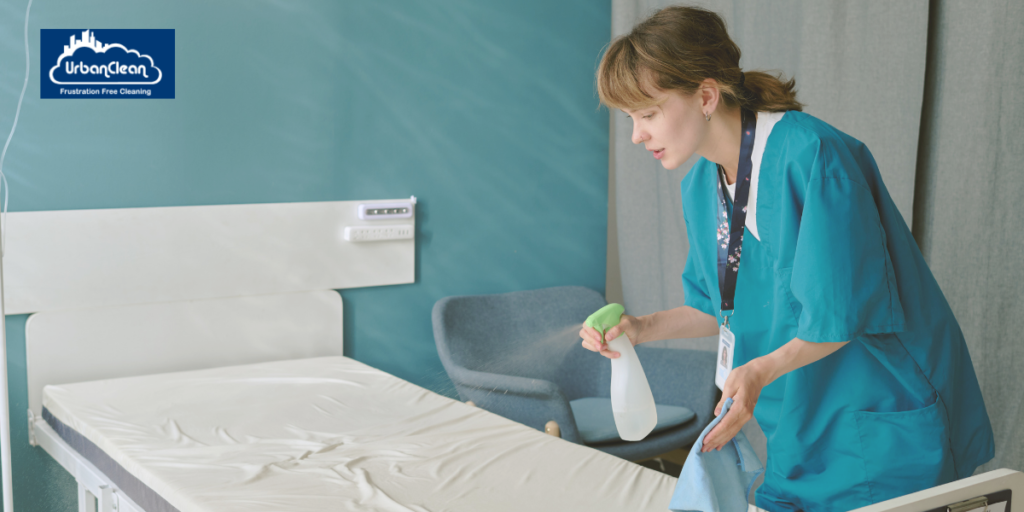
Take the products, for example. Healthcare facilities require hospital-grade disinfectants that are ARTG-listed and proven effective against pathogens like MRSA, C. difficile, and norovirus. Standard multipurpose cleaners used in office spaces don’t kill these pathogens and won’t meet compliance requirements.
The stakes are higher, too. Missing a daily clean in an office leaves a dusty desk. But missing one in a medical centre means an exam table contaminated with bodily fluids will sit uncleaned between patients.
Infection control protocols in healthcare facilities reflect these risks. The cleaning might look similar on the surface, but the products and processes are stricter because patient safety depends on them.
Infection Control Standards: What Brisbane Medical Centres Must Meet
Medical centres in Brisbane must meet infection control standards set by the National Safety and Quality Health Service (NSQHS). These standards apply across Australia’s healthcare sector and require cleaning with products listed on the Australian Register of Therapeutic Goods (ARTG). That said, many hospital-grade disinfectants don’t meet compliance. But remember, the product must be ARTG-listed and proven effective against healthcare-associated pathogens.
The standards also specify how often you need to clean. For example, high-touch surfaces need disinfecting multiple times per day, while waiting areas, treatment rooms, and staff spaces require cleaning schedules based on their contamination risk.
Meeting these protocols protects patients and keeps your facility compliant during inspections.
Daily Cleaning Requirements for Clinical Areas and Waiting Rooms
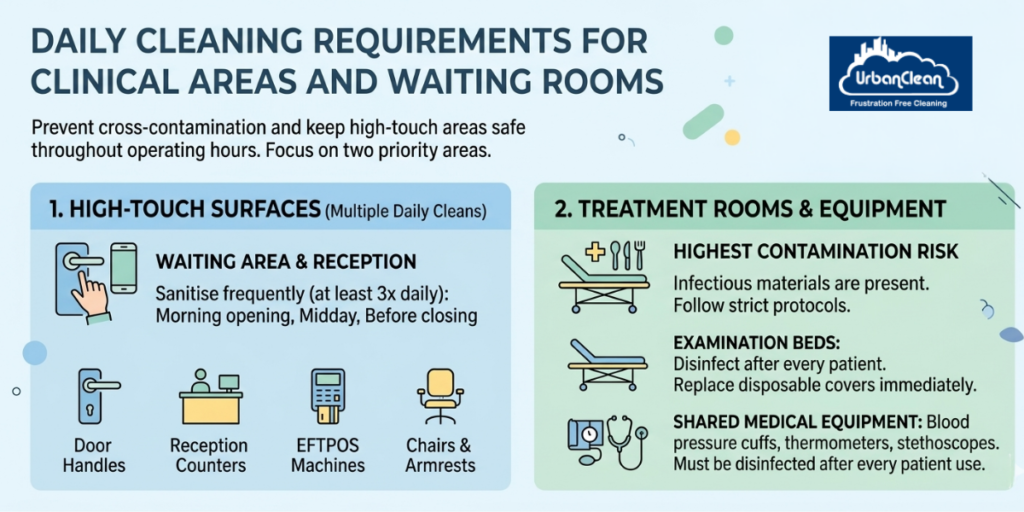
Daily cleaning in medical centres prevents cross-contamination between patients and keeps high-touch areas safe throughout operating hours. To maintain this protection, focus on two priority areas. First, high-touch surfaces require frequent attention. Second, treatment rooms carry the highest contamination risk.
Let’s break it down.
High-Touch Surfaces That Need Multiple Daily Cleans
Certain surfaces in your waiting area and reception accumulate germs quickly because hundreds of hands touch them daily. This includes high-touch surfaces like door handles, reception counters, and EFTPOS machines. They require more frequent sanitisation than other areas, at least three times a day: morning opening, midday, and before closing.
You should also sanitise waiting room furniture, like chairs and armrests. They get touched just as often, especially during busy periods when patient turnover is high.
Treatment Room and Equipment Sanitisation Protocols
Multiple patients pass through a single treatment room each day, leaving traces that the next patient shouldn’t have to see. Treatment rooms carry a higher contamination risk because that’s where direct patient care happens, and infectious materials are present.
This elevated risk is why examination beds must be disinfected after every patient, with disposable covers replaced immediately. And surprisingly, the same strict approach applies to shared medical equipment like blood pressure cuffs, thermometers, and stethoscopes too.
Weekly and Monthly Deep Cleaning Schedules
Deep cleaning schedules target areas your daily routines miss, like behind equipment and overhead surfaces where contamination builds up over time. You should schedule these tasks weekly or monthly, depending on your facility’s traffic and contamination risk:
- Weekly Tasks: These sessions tackle buildup in areas that daily cleaning overlooks, including floors behind furniture, under waiting room chairs, air vents, and light fixtures. Although these spots appear clean, they can harbour bacteria if skipped.
- Monthly Deep Cleans: Areas like storage rooms, behind medical equipment, and ceiling corners are often missed during weekly routines, which can cause contamination to settle over time. Scheduling a monthly deep clean prevents buildup before it becomes a problem.
- Documentation: You need to log every deep cleaning task with the date, products used, and the staff member responsible. These records provide immediate proof of compliance when auditors or inspectors review your facility.
Stick to your deep cleaning schedule, and your facility stays compliant and audit-ready year-round.
See also: How UK Students Can Balance Online Entertainment and Academic Responsibilities
Clinical Waste Disposal and Hazardous Material Handling
Clinical waste, like used needles, swabs, and contaminated bandages, can expose staff to bloodborne pathogens if mishandled. To protect staff and comply with healthcare regulations, you must handle these materials using strict disposal protocols.
Begin by segregating waste properly. All clinical waste must go into designated yellow bins, collected by licensed contractors for specialised disposal. Don’t mix them with general rubbish or recycling.
Sharps require even stricter handling due to puncture risk. That means used needles, scalpels, and broken glass should be placed into puncture-proof sharps containers immediately after use. Once they’re in the container, check them regularly and replace them at the three-quarter fill line to prevent overfilling and accidental needle-stick injuries.
Beyond proper container use, your cleaning staff must also follow biohazardous material protocols when handling them. That includes wearing personal protective equipment (PPE) such as gloves, face shields, and protective gowns, and consulting safety data sheets for correct disposal procedures. These protocols protect your team from hepatitis B, hepatitis C, and HIV.
Choosing Healthcare Cleaning Services That Meet Industry Standards
Not all commercial cleaning services meet the high standards of medical facilities. Those who do have experience in the healthcare sector and understand NSQHS infection control standards for clinical areas.
When evaluating a service, evaluate both their products and their processes. They should use ARTG-listed disinfectants, maintain detailed cleaning logs for compliance audits, and follow strict protocols for high-touch surfaces, treatment rooms, and clinical waste.
Pro tip: Check the team’s track records as well to ensure they have experience meeting the strict demands of medical centre cleaning.
Keep Your Medical Centre Safe, Compliant, and Patient-Ready
Compliant medical facility cleaning goes beyond basic office cleaning: ARTG-listed disinfectants, documented cleaning schedules, terminal cleaning protocols, and strict clinical waste handling. These aren’t optional extras. They’re mandatory under NSQHS Standards and protect patient safety while keeping your facility compliant during inspections.
Start by reviewing your current cleaning schedule against the requirements in this guide. Then check whether your high-touch surfaces are cleaned 3-4 times daily, treatment rooms receive terminal cleaning after each patient, and all products are ARTG-listed. If any gaps exist, address them before your next inspection.
If you need professional medical facility cleaning in Brisbane that meets NSQHS Standards and ARTG requirements, Urban Clean specialises in healthcare facility compliance. Contact us to discuss your facility’s specific needs.